Making a Process Change to Your Anaerobic Digester? Six Things to Consider

When you make a process change to an anaerobic digester, how do you know whether it worked? We look at six things to consider, from establishing a good baseline and defining the hypothesis to tracking operating conditions, analyzing the data and giving the biology enough time to respond.
TL;DR
- Start with a good baseline and define the question and hypothesis before beginning an intervention.
- Track operating conditions, instrumentation and performance data throughout the test so you can separate the intervention from everything else happening at the plant.
- Give the biology enough time to respond, but don’t rely on HRT alone to determine whether an intervention worked.
Field Notes
When you make an operating change to a digester, one of the first questions is usually how long it will take to know whether it worked.
There is no single answer. We've seen measurable changes show up in days, while others need weeks or longer.
Hydraulic retention time can provide a useful timeframe, particularly when an intervention depends on material moving through the digester or the microbial population adjusting. But it isn't foolproof.
We've also found that time isn't the only issue. If the plant wasn't stable when you started, the feedstock changed during the evaluation period, or there was an issue with the measurement itself, waiting another retention cycle may not give you a better answer.
Based on what we've seen, there are six things worth considering when you're evaluating an intervention.
Establish a good baseline
One operator we spoke with had spent months getting a new facility running consistently. Only once the plant reached what he considered stable production did he begin deliberately reducing the amount of feed going into the digesters.
Within two to three weeks, he could see the effect.
The plant's retention time was considerably longer than that. He didn't need to wait a full HRT to learn something useful. What mattered was having a starting point he understood well enough to recognize the effect of the adjustment.
A plant doesn't need to be perfectly stable before you can evaluate an intervention, but you do need to understand the baseline and the normal variability around it.
Know what question you're trying to answer
Before starting an intervention, decide what question you're trying to answer and what you expect to happen. Depending on the test, you may be looking for more biogas, higher specific biomethane yield, greater solids destruction, increased throughput or the ability to reduce feed while maintaining production.
The metric you choose should support the hypothesis you're testing, and the baseline needs to be measured for long enough to account for the natural noise in the data.
In one trial we reviewed, the customer specified in advance which measurement it would accept as evidence of success. That avoids redefining success after the data comes in.
Keep track of what else is changing
Plants don't stop operating because someone wants to run an experiment. During an evaluation period, feedstock and loading may vary, equipment can go down, and operators still need to make adjustments to keep the plant running.
In several of the cases we've reviewed, this was a bigger problem than the length of the test itself. Feed changes, shutdowns, temperature shifts and other operating adjustments made it difficult to isolate the effect of the intervention.
You can't always hold everything constant. But you can document what happened and account for it when you analyze the results. And realistically, sometimes you just need to start over.
Make sure the measurement didn't change
Sometimes the apparent process response is actually a measurement change.
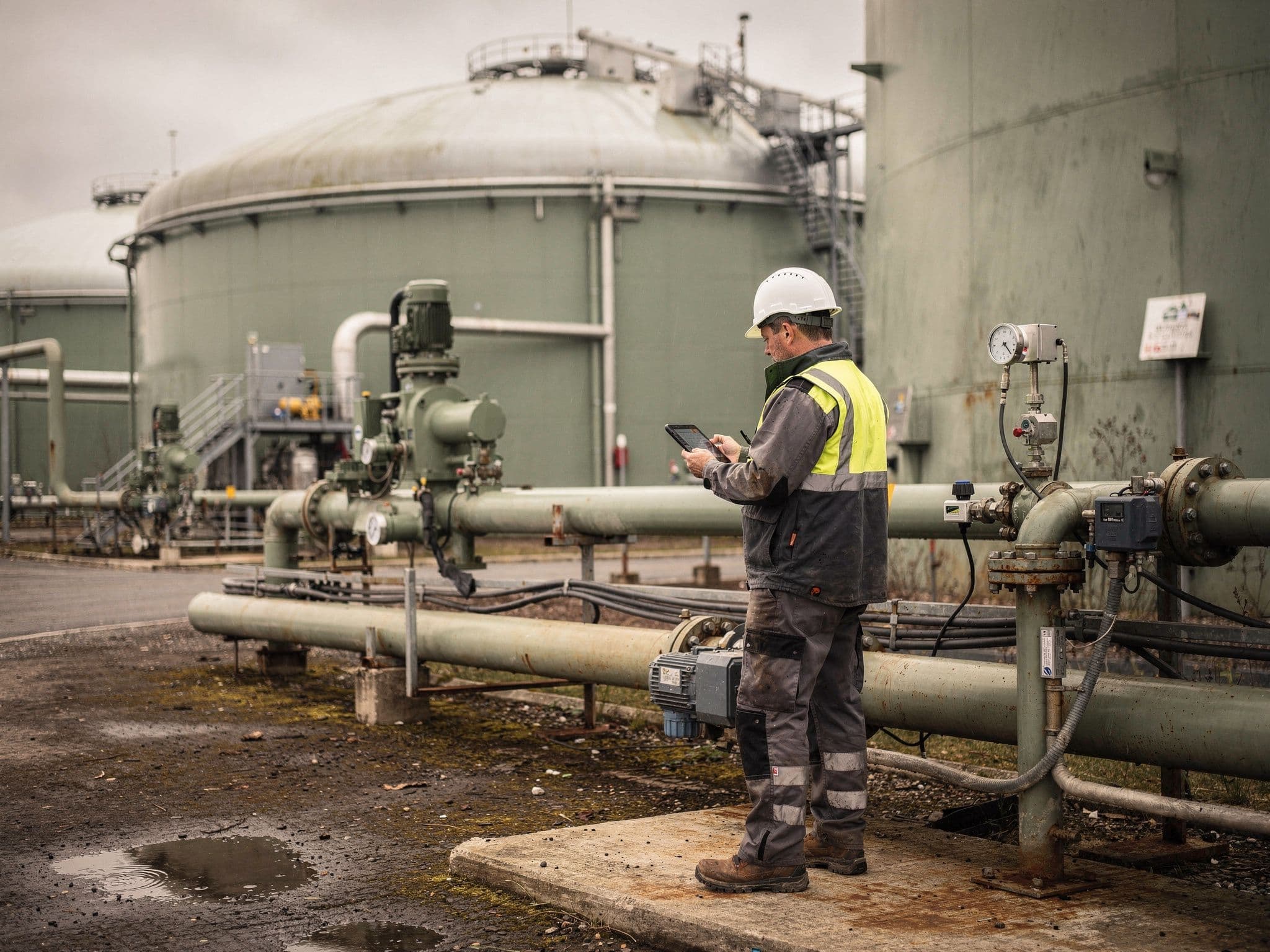
A sensor can be recalibrated. A laboratory method can change. A calculation may use a rolling average. There can also be less obvious changes in the instrumentation itself. Was a flow meter replaced? Was new firmware uploaded to a sensor, pump or other piece of equipment? Was an instrument serviced or recalibrated during the test?
It is worth keeping those events alongside the operating log. Before attributing a shift in performance to the intervention, check whether anything changed in the instrumentation, the underlying measurement or how the result was calculated.
Track the intervention as it happens
Once the intervention starts, the data needs to be collected in a way that makes the before-and-after comparison meaningful.
That means tracking the test alongside the operating conditions around it: feedstock characteristics, loading, gas production and composition, process chemistry, and other variables that could influence the result. The relevant data will depend on the question you're trying to answer.
How the data is analyzed and compared matters too. A single day's production can tell a very different story from performance over an appropriate baseline and evaluation period. Normalizing the data, for example by looking at gas production relative to feed or volatile solids, can also reveal patterns that aren't obvious in total production alone.
We've seen how much that level of analysis can matter. At one co-digestion facility, a recurring high-organic feedstock delivery was followed by about a 4% drop in biogas production, with recovery taking roughly three days. The pattern wasn't apparent in the monthly average. It became visible when feedstock loads, biogas production, electricity generation and operator notes were brought together on the same timeline.
This is one of the reasons we've become increasingly focused on bringing operating, analytical and performance data together. It becomes much easier to see what happened, when it happened and what else was going on at the plant at the same time.
Watch while you wait
The final performance result may take time, but the data collected during the intervention can tell you a lot about how the process is responding.
Some measurements can provide an earlier indication that the biology is moving in the wrong direction. For example, an accumulation of volatile fatty acids in the digestate can indicate that acid production and methanogenesis are out of balance and the methanogenic population isn't converting those acids effectively.
We've learned in our own work not to overinterpret those early signals. In one trial, some intermediate measurements initially appeared to suggest a biological response. With more data and better comparisons, those early signals didn't hold up, and the final performance improvement never materialized.
Early indicators can help determine whether it makes sense to continue the test or whether something needs attention. They aren't necessarily enough to conclude that the intervention worked.
So how long should you wait?
It depends on the intervention, the metric you're watching and how variable the plant normally is.
HRT can be an important part of determining that window, but it shouldn't become a universal rule. Some process responses appear within days. In other situations, weeks or multiple retention cycles may be appropriate.
Even the actual HRT may be different from the design value. Changes in flow, active digester volume or short-circuiting can all affect how long material actually remains in the system.
For more formal evaluations, we've seen protocols establish a baseline first and then allow approximately 1.5 to two HRTs for evaluation. That isn't a prescription for every digester or every experiment. The evaluation period needs to fit the plant and the question being asked.
Set expectations before you start the clock
There is a practical side to this for the people operating the plant. Management understandably wants to know when there will be an answer.
Before the intervention begins, agree on what is being tested, how success will be measured and roughly when there should be enough information to make a decision. It also helps to identify what you'll report along the way, especially if the final answer could take several weeks.
That sets expectations with stakeholders without forcing a conclusion before the data supports one.
Signals Takeaway
Time matters when you're evaluating a process intervention, but waiting longer won't fix a poor baseline, changing operating conditions or a problem with the measurement itself.
We've become much more careful about defining the evaluation before an intervention begins and collecting the data needed to understand what happens afterward. That includes establishing the baseline, defining the question and hypothesis, tracking the test and the operating conditions around it, and giving the biology enough time to respond.
The goal isn't simply to wait long enough. It's to have enough good information to understand what happened and make the right operating decision.
If you're trying to better understand how an intervention is affecting digester performance, we'd be glad to talk. We've helped facilities bring better data and analytical intelligence into the process so they can make more informed operating decisions.
“The goal isn't simply to wait long enough. It's to have enough good information to understand what happened and make the right operating decision.”